
- English
- Español
- Português
- русский
- Français
- 日本語
- Deutsch
- tiếng Việt
- Italiano
- Nederlands
- ภาษาไทย
- Polski
- 한국어
- Svenska
- magyar
- Malay
- বাংলা ভাষার
- Dansk
- Suomi
- हिन्दी
- Pilipino
- Türkçe
- Gaeilge
- العربية
- Indonesia
- Norsk
- تمل
- český
- ελληνικά
- український
- Javanese
- فارسی
- தமிழ்
- తెలుగు
- नेपाली
- Burmese
- български
- ລາວ
- Latine
- Қазақша
- Euskal
- Azərbaycan
- Slovenský jazyk
- Македонски
- Lietuvos
- Eesti Keel
- Română
- Slovenski
- मराठी
- Srpski језик

Analysis of the Middle East Photovoltaic Market
With global warming and the rise of new energy sources, Solar energy, an inexhaustible and clean energy source, has become increasingly popular. As the largest partner in the Middle East, China's solar power generation projects, and Egret Solar, as a photovoltaic professional, are also making their own contribution to the photovoltaic industry and cooling down the world. The following are some insights and analyses of Egret Solar on the photovoltaic market in the Middle East.
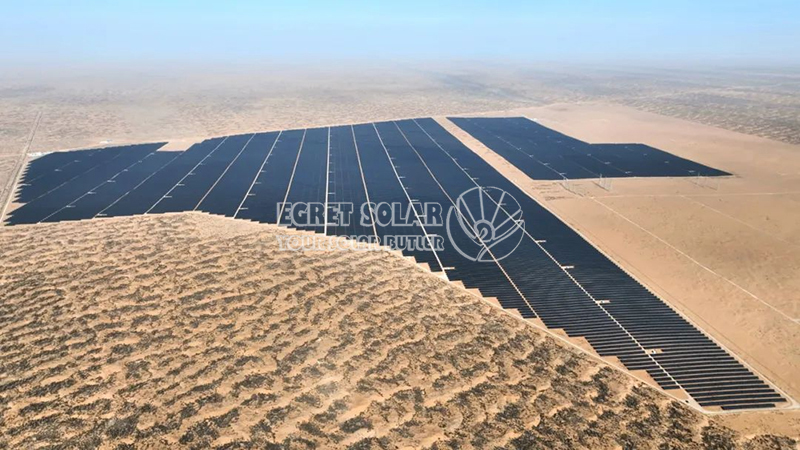
Middle Eastern countries are undergoing a profound transformation in the energy sector, with the expansion and deployment of photovoltaic energy occupying a core position. This strategic choice is not only a positive response to domestic energy demands, but also an active response to the challenges of global climate change and energy security issues.
1.The goal of photovoltaic development
The strategic goals of photovoltaic development in various Middle Eastern countries have distinct endogenous characteristics and mainly revolve around the following aspects:
Meeting the growth in electricity demand: With the continuous development of the economy and the increase in population, the demand for electricity is constantly rising. Photovoltaic power, as a clean and sustainable form of energy, has become an important choice to meet this demand.
Enhance energy security: By developing the domestic photovoltaic industry, reduce reliance on external energy, and enhance the stability and security of energy supply.
Reducing carbon footprint: Industrial exports are an important part of the economy of Middle Eastern countries. The application of photovoltaic energy helps to reduce carbon emissions in the industrial production process and enhance international competitiveness.
Addressing climate change: As active participants in global climate change, Middle Eastern countries are committed to achieving emission reduction targets by developing renewable energy sources such as photovoltaic power, contributing to global climate governance.
2. Favorable conditions for achieving the goal
Middle Eastern countries enjoy multiple favorable conditions in promoting the development of photovoltaic power:
Abundant photovoltaic resources: The Middle East enjoys abundant sunlight, providing unique natural conditions for photovoltaic power generation.
Low-cost land: The vast desert land offers free or low-cost site options for building large-scale photovoltaic power stations.
Policy support and regulatory environment: Transparent auction mechanisms, long-term power purchase agreements provided by state-owned purchasers, favorable financing conditions, and a continuously improving policy and regulatory environment all offer strong guarantees for photovoltaic projects.
Cost advantage: Thanks to the above conditions, the cost of photovoltaic power generation in the United Arab Emirates has dropped to a globally leading level, with only 1.35 cents per kilowatt-hour.
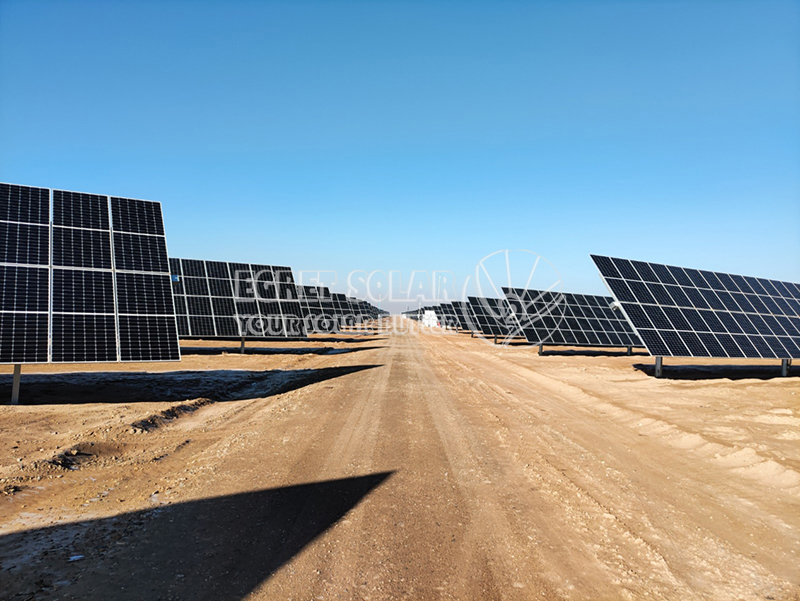
3. Overview of Energy Policies in the Middle East
The ambition for renewable energy and the pace of advancing clean energy deployment vary among Middle Eastern countries.
The United Arab Emirates, Saudi Arabia, Oman and Qatar are at the forefront in promoting energy transition. In contrast, Bahrain and Kuwait are slightly lagging behind.
The following is our objective analysis of the key measures taken by the top four countries in terms of regulatory and energy policy reforms.
1. Saudi Arabia
Saudi Arabia has taken a significant step in the energy sector by establishing an energy spot market, providing a platform for flexible trading of renewable energy.
Its national renewable energy plan adopts a mixed arrangement. 30% of the projects are carried out through competitive bidding, while the remaining part is developed by the domestic leading enterprise ACWA Power. This strategy aims to promote a balance between market competition and state control.
Saudi Arabia plans to achieve an installed capacity of 130 gigawatts of renewable energy by 2030. Despite still facing challenges in power trade, distribution and implementation capabilities, the intensity and determination of its reform should not be underestimated.
2. Uae
The United Arab Emirates is committed to increasing the proportion of clean energy through a diversified energy structure. The country plans to increase the share of clean energy to 44% by 2050, covering multiple fields such as photovoltaic, wind energy and nuclear power. Dubai, as a pioneer, has seen its rooftop photovoltaic power generation systems widely welcomed.
However, the recent adjustment of regulatory policies has restricted the maximum installation capacity of rooftop photovoltaic systems, which may have a certain impact on its rapid development momentum. This change reminds us that policy-making needs to strike a balance between encouraging innovation and ensuring the stability of the power grid.
3. Qatar
Qatar has adopted a more centralized model in the field of renewable energy. Its General Electric and Water Company (KAHRAMAA) serves as the sole buyer, responsible for the procurement and distribution of electricity.
Qatar aims to reduce the carbon footprint of its liquefied natural gas (LNG) expansion projects and enhance its competitiveness in the international market by putting into operation its second and third utility-scale photovoltaic power plants.
This move not only reflects Qatar's commitment to environmental protection, but also demonstrates its strategic vision of using renewable energy to enhance the competitiveness of traditional industries.
4. Oman
Oman stands out among the member states of the Gulf Cooperation Council (GCC). It does not have national leading enterprises like Masdar of the United Arab Emirates or ACWA Power of Saudi Arabia to lead the launch of renewable energy power generation. However, the Omani government has demonstrated its firm support for the development of renewable energy through a series of policy innovations.
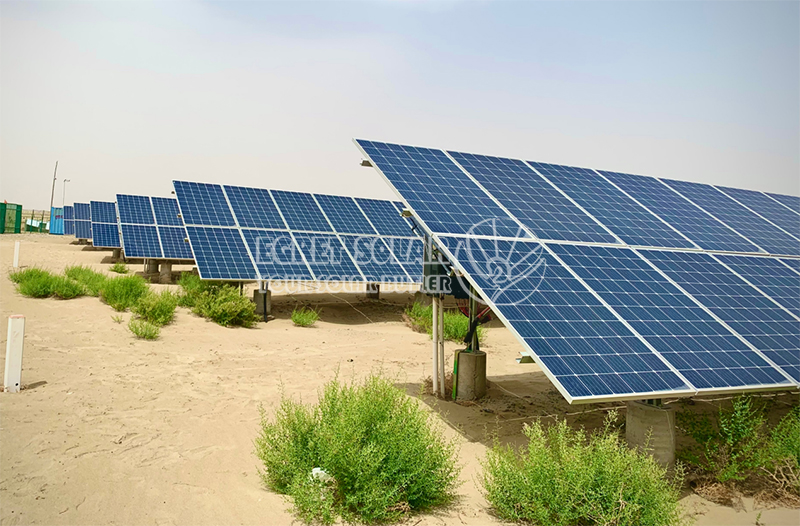
This includes adopting a cost-reflecting electricity price mechanism to encourage large industrial consumers to reduce energy consumption or deploy photovoltaic systems. Approve the policy of purchasing rooftop photovoltaic power from consumers; And formulate natural gas pricing policies and the national energy strategy for 2040.
Oman plans to meet 30% of its electricity demand from renewable energy projects by 2026. These reform measures have laid a solid foundation for its energy transition.
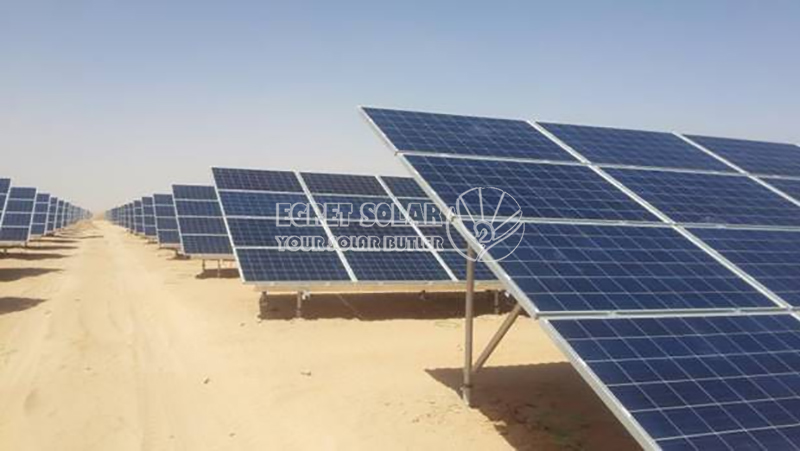
In conclusion, the member states of the Gulf Cooperation Council have each demonstrated their strengths in regulatory and energy policy reforms. Despite facing different challenges, they have all shown their determination and action to promote the development of renewable energy and achieve energy transformation. These reforms not only help enhance energy security and reduce carbon emissions in various countries, but also provide valuable experience and inspiration for the global energy transition.
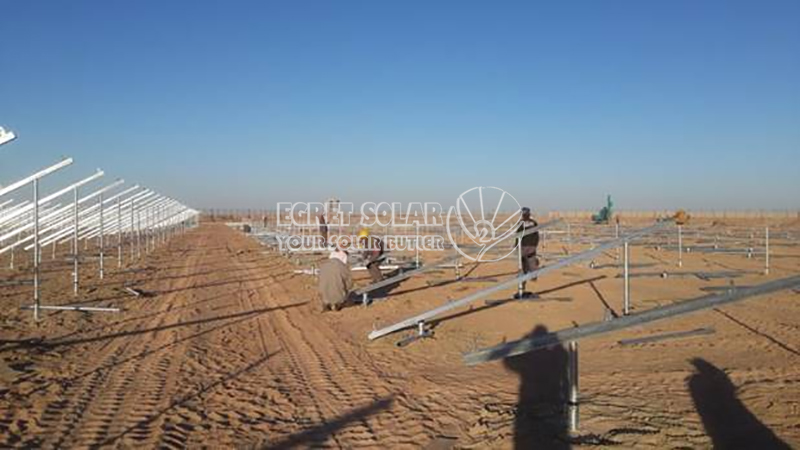
As a member of the photovoltaic industry, Egret Solar is also making its own humble contribution to global clean energy. Our solar Aluminum Ground Mounting System and solar Carbon Steel Ground System are very suitable for the deployment conditions in the Middle East. Photovoltaic power stations not only bring green energy but also serve as a barrier against wind and sand in the local area. This is a win-win situation for energy production and environmental restoration, and also provides new ideas and experiences for global photovoltaic sand control.