
- English
- Español
- Português
- русский
- Français
- 日本語
- Deutsch
- tiếng Việt
- Italiano
- Nederlands
- ภาษาไทย
- Polski
- 한국어
- Svenska
- magyar
- Malay
- বাংলা ভাষার
- Dansk
- Suomi
- हिन्दी
- Pilipino
- Türkçe
- Gaeilge
- العربية
- Indonesia
- Norsk
- تمل
- český
- ελληνικά
- український
- Javanese
- فارسی
- தமிழ்
- తెలుగు
- नेपाली
- Burmese
- български
- ລາວ
- Latine
- Қазақша
- Euskal
- Azərbaycan
- Slovenský jazyk
- Македонски
- Lietuvos
- Eesti Keel
- Română
- Slovenski
- मराठी
- Srpski језик

How do I choose a Solar Ground Mounting System that actually lowers LCOE?
When I plan utility and C&I arrays, I judge hardware by what it does to lifetime cost, not just the line item price. Working with Egret over multiple sites taught me that a well-engineered Solar Ground Mounting System trims installation hours, reduces civil work, and survives rough weather. In this guide, I’m sharing the field lessons I use to evaluate any Solar Ground Mounting System so you can spec confidently and keep financiers relaxed from day one.
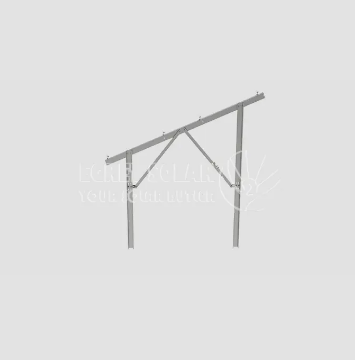
Where does a Solar Ground Mounting System move the LCOE needle most?
- Foundations — fewer piles and less drilling mean faster arrays. A stiff structure lets me widen post spacing without risking deflection.
- Rail geometry — high moment of inertia with smart bracing controls sag and keeps module clamp ranges within tolerance.
- Fasteners and tolerances — slotted holes, integrated bonding, and one-tool torque make crews faster and QC cleaner.
- Corrosion strategy — correct coatings or alloys save repainting and rework years later, especially on coastal or high-salinity sites.
Get these right and a Solar Ground Mounting System stops being a cost center and becomes an LCOE lever you can quantify in your model.
How do I match foundations to soil without overbuilding?
I start with geotech, then pick a foundation that fits soil bearing and logistics. Here’s the short list I keep on my tablet:
| Foundation | Soil and Site Fit | Pros | Watch Outs |
|---|---|---|---|
| Driven C-post / H-beam | Medium to dense soils, low cobble content | Fastest install, minimal spoil, easy decommission | Rock layers or heavy cobbles slow penetration |
| Ground screw | Mixed soils, light rock, frost lines | No concrete, good tensile resistance, repeatable torque spec | Needs precise torque control and pilot guidance |
| Micro-pile or cast-in-place | Poor soils, high water table, steep grades | Works where others don’t, high ultimate capacity | Concrete logistics, cure time, weather exposure |
An adaptable Solar Ground Mounting System that supports all three options lets me pivot when subsurface surprises show up during test ramming.
What materials keep me inside a 25 year plan without corrosion headaches?
- Aluminum rails with magnesium-aluminum-zinc coated steel posts — a balanced combo for stiffness, weight, and corrosion control.
- Integrated electrical bonding — UL 2703 style bonding teeth or washers remove extra copper jumpers and save labor.
- Fastener clarity — stainless where needed, but not everywhere; mixing alloys blindly can invite galvanic issues.
I’ve seen coastal arrays where the right alloy stack let a Solar Ground Mounting System sail through salt fog tests and real winters without frequent maintenance tickets.
How do I size for wind and snow without killing yield?
I prefer systems with clear structural charts and signed calcs for site wind exposure and ground snow loads. The good ones allow:
- Optimized tilt that balances irradiance with wind uplift behavior.
- Bracing options you can add only where the model needs them.
- Module layout flexibility for 1P or 2P so I’m not forced into the wrong geometry.
A rigorously modeled Solar Ground Mounting System avoids blanket bracing and lets me hit performance targets without trailer-loads of extra steel.
How do I make installation crews faster without compromising QC?
- Fewer SKUs — fewer bins means less picking time and fewer site shortages.
- Pre-assembled connections — clamps that arrive in sub-assemblies cut minutes off every string.
- Slot play and adjustability — generous slot ranges absorb surveying tolerances and undulating terrain.
- One-tool policy — consistent torque specs keep quality checklists simple.
With these in place, a Solar Ground Mounting System turns green crews productive by mid-week and keeps punch lists short at handover.
Which design choices simplify O and M over the long haul?
- Clear aisle spacing so mowing and snow removal don’t fight the structure.
- Accessible fasteners that can be re-torqued without removing modules.
- Drainage awareness in the base plates and rails to avoid water traps and freeze-thaw stress.
Every time I’ve selected a thoughtful Solar Ground Mounting System, the site team reported fewer nuisance visits in the first two years—exactly when reputations are made.
What questions do I ask vendors before I sign the PO?
- Can I mix driven piles and ground screws on one BOM if the geotech varies across the parcel
- Do you provide stamped structural calcs for my county and do they reflect my exact module dimensions and clamp zones
- How many unique SKUs are in a 1 MW kit and what is the average labor minutes per module from your field studies
- What is the coating specification and test data for salt spray, ammonia, and UV exposure
- How does the warranty handle corrosion in coastal C5 environments and what are the exclusions
Why do I keep shortlisting Egret for competitive bids?
Consistency. When a vendor can support driven posts on Site A, screws on Site B, and keep the same rail philosophy, my crews don’t relearn everything. That continuity, plus clean documentation and responsive engineering, is why a robust Solar Ground Mounting System from a team like Egret tends to win my internal debriefs after COD.
What quick spec checklist helps me lock decisions faster?
- Module format supported including large-format bifacial and clamp windows
- Foundation options validated by geotech with pull-out and lateral tests
- Rail stiffness and allowable spans at my wind and snow loads
- Integrated bonding compliance and torque specs with one-tool approach
- End-to-end logistics plan with pallet density and labeled kits
Run that checklist and you’ll know quickly whether a Solar Ground Mounting System fits your portfolio or belongs in the “maybe next time” folder.
What is my closing take for buyers who need dependable ROI?
If you want a build that crews enjoy and investors trust, pick a partner who treats structure as a system, not a parts catalog. In my projects, the right Solar Ground Mounting System has consistently shaved install hours, tamed wind and snow surprises, and kept O&M simple. If you’re lining up a new site and want a straight, data-based conversation, contact us to compare layouts, foundation choices, and bill of materials side by side. Tell me your soil, wind, and schedule; I’ll show you how a thoughtfully engineered Solar Ground Mounting System from a team like Egret pays for itself before the ribbon cutting.